
How Long Do Dentures Last Before They Need to Be Replaced?
Most dentures do not last forever, even when they are cleaned well and handled carefully. In general, full and partial dentures often last 5 to 10 years, with some clinical references noting an average of 10 years.
The material may remain intact for years, but the fit often changes sooner. That is because the gums and jawbone continue to change shape over time, which can make a once-stable denture feel loose, uneven, or harder to chew with.
A denture can still look acceptable and still not function well. When fit declines, chewing, speech, comfort, and tissue health can all be affected long before the denture actually breaks. If relines, repairs, or a remake are needed, our dentures page explains common solutions and what to expect.
Empower Dental Glendale provides custom dentures in Glendale, CA and offers the kind of denture care described here.
Why Dentures Wear Out Over Time
Dentures wear out for two main reasons. First, the appliance itself is exposed to daily chewing forces, temperature changes, cleaning, and occasional impact.
Second, the mouth changes after teeth are removed. The jawbone gradually shrinks in a process called bone resorption because it no longer receives the same stimulation that natural tooth roots provide.
As the ridge changes, the denture base no longer matches the gums as closely. That can lead to movement, pressure spots, trapped food, and sore areas even when the denture teeth and acrylic are not badly worn.
Several factors can shorten denture lifespan:
- Teeth grinding or clenching
- Dry mouth, which can reduce denture stability
- Poor cleaning habits that allow heavy buildup
- Dropping the denture during cleaning
- Changes in weight, health, or oral tissues
- Wearing dentures continuously without rest periods
These factors do not guarantee failure, but they do increase stress on both the denture and the tissues underneath.
Full Dentures vs. Partial Dentures
Full dentures replace all teeth in the upper arch, lower arch, or both. Their biggest long-term challenge is usually loss of fit as the gums and bone change.
Partial dentures replace some missing teeth and attach around remaining natural teeth. Their lifespan also depends on the health of the supporting teeth, the clasps, and the bite.
What Often Happens With Full Dentures
A full denture may become loose gradually, especially on the lower arch where retention is naturally more difficult. Lower dentures usually have less surface area and more tongue movement, so even small ridge changes can reduce stability.
For patients with repeated looseness, implant dentures can offer more stable retention and better chewing. Studies also show increased biting force compared with conventional dentures.
What Often Happens With Partial Dentures
A partial denture may need changes if a supporting tooth develops decay, gum disease, or mobility. In some cases, the framework can still be used, but if tooth loss changes the design too much, replacement may make more sense than repeated modification.
Signs a Denture May Need Adjustment or Replacement
Many patients assume a denture only needs attention when it breaks. More often, the first signs are changes in fit, chewing, or tissue comfort.
Common signs include:
- The denture rocks, slips, or lifts during eating or speaking
- Sore spots keep returning in the same area
- Clicking occurs when talking or chewing
- Food collects underneath more often than before
- The bite feels uneven or less efficient
- Cracks, chips, or worn denture teeth are visible
- The denture smells or stains despite regular cleaning
- The face appears less supported because the bite has worn down
If a denture becomes painful, stops functioning well, or suddenly fits differently, a dental exam is the safest next step. Persistent mouth sores or bleeding areas should not be ignored, especially if they do not improve soon after removing the denture.
Reline, Repair, or Replace?
A loose denture does not always need full replacement. Sometimes the base can be adjusted to better match the current shape of the gums, which is called a reline.
A reline can help when the denture teeth and base are still in reasonable condition but the fit has changed. This is common after gradual bone remodeling or healing from extractions.
A repair may be enough if there is a chip, fracture, or broken clasp and the rest of the denture is still serviceable. Repeated fractures, however, can point to a deeper issue such as poor fit, bite imbalance, or material fatigue.
Replacement is often the better option when several problems are happening at once. Examples include major tooth wear, multiple repairs, chronic looseness, poor appearance, and reduced chewing performance.
A Simple Way to Think About It
| Situation | What It May Mean |
| Denture is intact but loose | Fit may have changed, and a reline or remake may be needed |
| Denture has one small break | A repair may be possible if the overall design is still sound |
| Teeth are flat and chewing is harder | The denture may be worn out functionally |
| Repeated sore spots keep returning | The fit or bite may need professional reassessment |
| Several repairs over the years | Full replacement may be more efficient and predictable |
A dentist can determine whether the main problem is the appliance, the bite, the soft tissue, or the underlying bone support. That distinction helps guide the right treatment.
What Affects How Long Dentures Last?
The answer is not just about the material. It is also about how the denture and the mouth age together.
Chewing forces matter. A patient who grinds, clenches, or regularly chews very hard foods may wear denture teeth faster or place more stress on the base.
Oral anatomy matters too. A flatter lower ridge, dry mouth, or reduced muscle control can make a denture less stable and more likely to shift, which increases friction and irritation.
Maintenance also affects outcomes. Regular dental follow-up helps identify fit changes before they turn into fractures, chronic sores, or major chewing problems.
For patients seeking a longer-term solution, dental implants can sometimes provide support that improves function and stability compared with removable appliances.
In practical terms, dentures tend to last longer when they are cleaned consistently, stored safely, checked periodically, and updated when fit changes begin rather than after function has already declined.
How to Help Dentures Last Longer
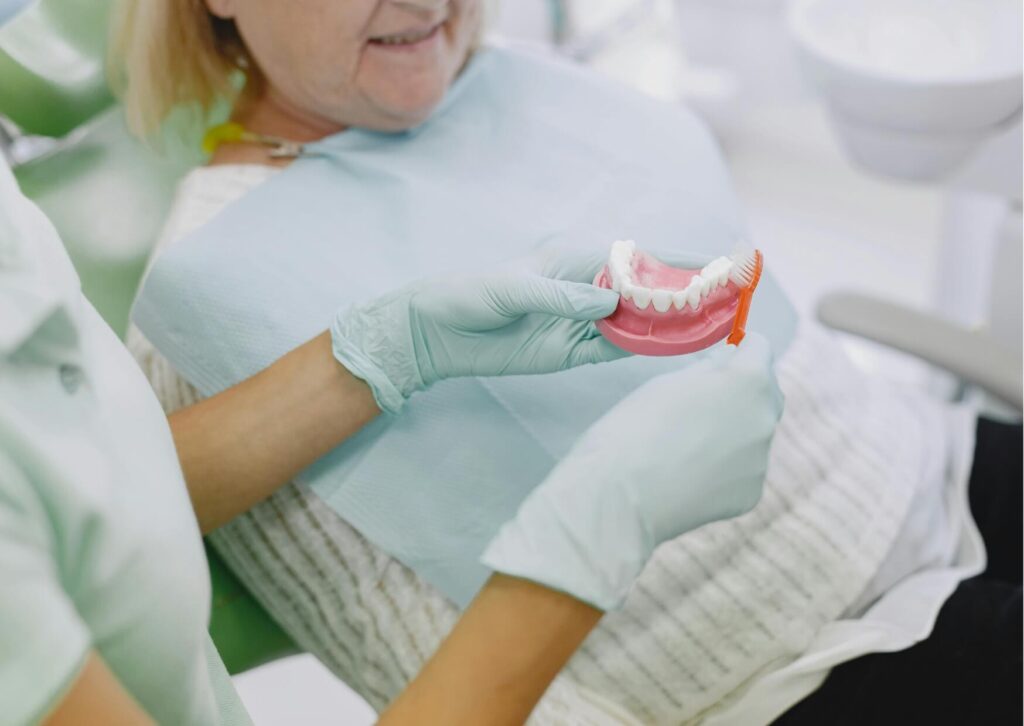
Dentures are durable, but they are not indestructible. Small daily habits often have the biggest effect on how long they stay comfortable and functional.
Helpful habits include:
- Clean dentures daily with products recommended for denture materials
- Rinse after meals when possible to reduce debris buildup
- Handle them over a folded towel or sink with water to lower the risk of breakage if dropped
- Keep follow-up visits even when the denture seems acceptable
- Report looseness, sore spots, or chewing changes early
- Remove dentures as advised to give the tissues time to rest
One point is worth emphasizing: do not try to reshape or glue a denture at home. Household adhesives and self-adjustment can damage the appliance and irritate oral tissues.
When to Seek Prompt Dental Care
Some changes can wait for a routine appointment, but others deserve quicker attention. Severe pain, sudden inability to wear the denture, swelling, trauma, or a broken denture with sharp edges should be assessed promptly.
If a denture breaks and creates sharp edges or you experience sudden severe pain or swelling, seek emergency care right away so the area can be protected and treated.
A denture that suddenly stops fitting may reflect tissue swelling, rapid oral changes, or damage that is not obvious from the outside. New lumps, persistent ulcers, white or red patches, or bleeding areas under a denture also need evaluation because not every sore spot is caused by friction.
If chewing has become less efficient, speech has changed, or the denture feels older than it looks, a professional exam can clarify whether a reline, repair, or replacement is the most efficient next step. Early evaluation often saves time and frustration.
For denture evaluation and care, Empower Dental Glendale provides dentures in Glendale, CA and serves nearby Pasadena and Burbank. Call us at (818) 293-2228 to schedule.
FAQs
How often should dentures be replaced?
Many dentures are replaced about every 5 to 10 years, but there is no fixed rule for everyone. Some need replacement sooner because of poor fit, worn teeth, fractures, or changes in the jawbone and gums.
Can dentures last 20 years?
Some dentures may physically remain intact that long, but long-term survival is not the same as good function. A denture that is old often has wear, fit problems, or bite changes even if it has not broken.
How do I know if my dentures are too old?
Frequent looseness, sore spots, difficulty chewing, visible wear, repeated repairs, or a sunken facial appearance can all suggest an aging denture. A dental exam is the best way to tell whether the issue is age, fit, tissue change, or damage.
Is it better to reline dentures or get new ones?
It depends on the condition of the denture. If the main issue is fit and the denture is otherwise sound, a reline may help, but if there is major wear or repeated damage, replacement may be the better long-term option.
Do lower dentures wear out faster?
Lower dentures do not always wear out faster as a material, but they often become unstable sooner. That is because the lower jaw usually offers less natural suction and changes shape more noticeably over time.
If you are comparing veneers & lumineers, the key question is not which name sounds…
A single tooth implant is often one of the most stable long-term ways to replace…
Yes, composite fillings can stain over time. In most cases, the color change comes from…
Flexible Payment Options
Get started in minutes with no impact on your credit—plus take advantage of 0% APR financing for up to 24 months.
- Quick approval process
- Soft credit check only - no effect on your score
- Apply funds to any dental service
Click below to check your eligibility - completely risk-free.